
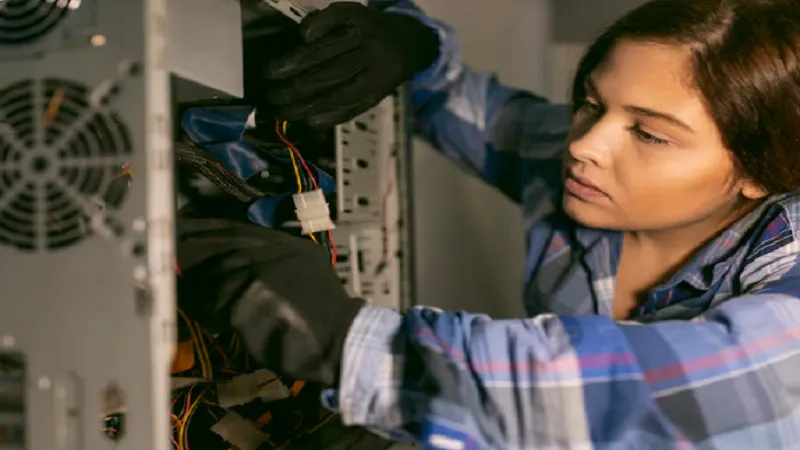
Heating and cooling systems often appear to fail without warning, but many breakdowns begin long before the unit stops running. Behind the cabinet doors, electrical components handle switching, sensing, starting, and protecting the equipment through thousands of operating cycles. As these parts age, their performance can drift, weaken, or become inconsistent under load. A system may still power on, yet hidden wear can make it less reliable during temperature extremes when demand rises. Understanding how electrical wear develops helps explain why breakdowns occur suddenly in systems that seemed functional the day before and why minor electrical weakness can become a major comfort problem.
Where Wear Disrupts Operation
- Contactors, Capacitors, and Relay Fatigue
Some of the most common heating and cooling breakdowns begin with electrical components that cycle repeatedly under load. Contactors open and close to allow power to flow to motors and compressors, but over time, their contact surfaces can pit, carbonize, or stick due to arcing and heat exposure. That wear changes how consistently voltage reaches the equipment, sometimes causing intermittent startup problems or full failure during a demand call. Capacitors are another frequent source of trouble because they help start and support motors during operation. As they weaken, motors may struggle to turn over, run hotter than intended, or draw current in ways that place more stress on the system. Relays can exhibit similar fatigue, especially in older units, where repeated switching causes internal wear that is not visible from the thermostat. A technician or HVAC Contractor investigating a system that hums, short cycles, or fails to start on hot or cold days often finds that one worn electrical part has been undermining operation for weeks or months. These failures feel sudden to occupants, but the internal decline is usually gradual, with each operating cycle pushing worn components closer to the point where reliable function gives way to inconsistent performance.
- Control Boards and Sensors Lose Accuracy
Not every electrical breakdown is caused by a part that fully burns out. In many systems, wear shows up as a loss of accuracy or communication rather than complete electrical failure. Control boards coordinate sequencing, timing, safety checks, and power distribution, so when solder joints weaken, terminals loosen, or board components degrade due to heat and vibration, the system can begin to behave unpredictably. A furnace may fail to complete ignition, an air conditioner may stop responding correctly to thermostat signals, or a blower may run at the wrong time because the control logic is no longer stable. Sensors also play a major role in these problems. Flame sensors, thermistors, pressure switches, and temperature probes all depend on reliable electrical behavior to interpret operating conditions. As residue builds, calibration drifts, or internal circuits weaken, the system can begin shutting down for protection even when the larger equipment is still mechanically sound. This type of wear is frustrating because it creates symptoms that seem inconsistent: the unit may work normally one day and fail the next. Yet from the system’s perspective, it is reacting to faulty or deteriorating information. Electrical wear at the control level often causes breakdowns not by cutting power completely, but by making the equipment misread its own operating state.
- Wire Connections and Terminals Create Heat
Electrical component wear is not limited to major replaceable parts. Small connection points throughout the system can also trigger breakdowns as they loosen, corrode, or overheat over time. Terminal connections on contactors, capacitors, sequencers, and circuit boards depend on secure contact to carry current efficiently. When those points begin to degrade, resistance increases, and that extra resistance generates heat. The result may be melted insulation, scorched terminals, or voltage drops that affect downstream components. In heating systems, worn connections can interrupt ignition sequence or blower operation. In cooling systems, they can interfere with compressor startup or fan performance when the load is highest. Vibration exacerbates this process, especially in outdoor condensing units, where weather exposure and seasonal cycling impose repeated stress on electrical terminations. What makes these issues significant is that the failure may not begin where the symptom appears. A struggling motor may appear to be the problem, while the real cause is a deteriorated spade connector or a partially burned wire end upstream. Electrical wear propagates through the system by altering how energy is delivered. When the current no longer flows cleanly through the circuit, other components are forced to operate under unstable conditions, shortening their service life and increasing the risk of a wider breakdown.
Electrical Wear Shapes System Reliability
The role of electrical component wear in heating and cooling breakdowns is larger than many property owners realize. Contactors, capacitors, relays, boards, sensors, wires, and terminals all contribute to the system starting, running, and protecting itself properly. As those parts age, they may not fail all at once. Instead, they lose consistency, create resistance, distort signals, or interrupt power, all of which slowly undermine the equipment. By the time the unit stops working, the wear has often been building for a long time. Recognizing that pattern helps explain why a seemingly minor electrical decline can lead to sudden loss of comforts, costly repairs, and system-wide operating strain.