
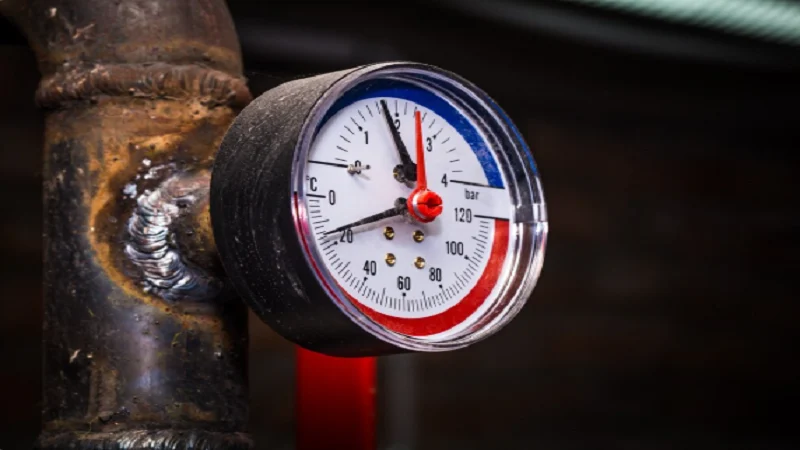
A boiler can still produce heat even as the surrounding system struggles to deliver it evenly. Rooms may warm slowly, radiators may stay partly cool, or the unit may cycle in a way that feels inconsistent from one day to the next. In many cases, pressure regulation sits at the center of those problems. Boiler pressure is not just a gauge reading to glance at during maintenance. It affects how water moves through the system, how efficiently heat reaches emitters, and how safely the boiler operates under changing demand. When pressure drifts too high or too low, heating performance often starts slipping before the problem becomes obvious.
How pressure shapes circulation
- Stable Pressure Supports Water Movement
Boiler pressure regulation matters because hot water heating depends on controlled circulation, not just heat generation. The boiler may raise water temperature properly, but if system pressure is not maintained within the intended range, that heated water may not move through the piping network with the consistency the home requires. In closed-loop systems, pressure helps ensure that water reaches upper floors, baseboards, radiators, or hydronic loops without leaving sections starved for flow. If pressure is too low, air can become a bigger problem, circulation may weaken, and some heat emitters may receive less hot water than expected. If pressure is too high, relief valves may begin discharging, seals and fittings may face extra strain, and the system may operate in a way that feels unstable under load. The point of regulation is not to chase a number for its own sake. It is to preserve a steady relationship among the heat source, pump performance, water distribution, and emitter output so that the home receives usable, predictable warmth rather than uneven delivery shaped by hydraulic imbalance.
- Low Pressure Can Reduce Heating Reach
When boiler pressure falls below its normal operating range, the effect on heating performance often shows up as incomplete circulation rather than total failure. Water may still move, but not with enough force or consistency to serve the entire system properly. Upper-level radiators can become sluggish, air pockets may linger in high points, and some rooms may remain cooler even while the boiler appears to be functioning normally. That is because low pressure makes it harder for the system to maintain full water presence throughout the loop, especially in taller homes or more complex zoning layouts. In those situations, the boiler can produce heat that never reaches all the places it is supposed to. Homeowners sometimes interpret this as an equipment age issue or a thermostat problem, when the real issue is limited circulation due to improper pressure conditions. Even in service markets more commonly associated with forced-air concerns, such as furnace repair in Longwood, hydronic systems can exhibit similarly frustrating comfort symptoms when pressure does not support full distribution. A low-pressure condition turns a heating system that should feel even and stable into one that delivers warmth selectively, leaving parts of the house trailing behind the thermostat’s call for heat.
- High Pressure Creates A Different Kind Of Instability
Excessive boiler pressure creates a different set of performance problems. Instead of starving the system, it places stress on components designed to contain and regulate heated water safely. Expansion tanks, relief valves, automatic fill valves, circulator seals, and threaded joints all depend on pressure staying within a controlled range as the water heats and expands. When that control is lost, the system may begin releasing water, introducing fresh makeup water more often than it should, or placing repeated stress on components designed for steadier operation. This affects heating performance because the boiler is no longer just heating and circulating water. It is also managing the consequences of hydraulic instability. Relief valve discharge can reduce available system water; repeated refill cycles can introduce dissolved oxygen that affects long-term condition; and fluctuating pressure can make temperature delivery less consistent across emitters. A boiler operating under high pressure may still feel hot at the source, yet the system as a whole becomes less dependable. The heating plant starts expending energy to cope with expansion and pressure imbalances rather than delivering clean, stable circulation to the occupied spaces.
Better Pressure Control Improves Heat Delivery
Boiler pressure regulation directly affects how well a hydronic heating system performs. Proper pressure helps water circulate fully, supports emitter output across the house, and protects components from unnecessary strain during temperature changes. When pressure falls too low, heat may not reach the spaces that need it most. When it rises too high, the system can become stressed, unstable, and less efficient at delivering. The goal is not simply to keep the gauge from moving. It is to maintain conditions that let the boiler, circulators, and distribution network work together as intended. Steady pressure is one of the quiet foundations of steady heat.