
Solar panels are marketed as “set it and forget it,” and in many homes, that’s mostly true. Still, owners often wonder whether dust, bird droppings, pollen, or nearby construction grime are quietly stealing production. Some people also worry that one missed cleaning will permanently damage panels or void warranties. The reality sits in the middle. Solar systems are durable and built for weather, but performance depends on a few practical habits that support long-term stability. Maintenance is less about frequent scrubbing and more about monitoring, safety, and catching small issues before they become expensive repairs. Knowing what truly affects output helps you spend time and money wisely. When you focus on the handful of checks that matter and ignore the rest, your system stays predictable without turning solar into another chore.
What Really Deserves Attention
-
Monitoring Output: The Maintenance Step Most People Skip
The most valuable “maintenance” is simply noticing when production changes. Many systems come with an app that shows daily generation, and a quick glance once a week can reveal problems early. A sudden drop might signal an inverter issue, a tripped breaker, a failed optimizer, or new shade from tree growth. Gradual declines may be due to seasonal changes in sunlight, dust buildup, or aging equipment, but they should still be tracked. Monitoring matters more than cleaning because it tells you whether cleaning is even necessary. If your production is stable for the season, heavy maintenance may be pointless. If the numbers are off, you can investigate with purpose. Keep your focus on patterns: compare the current week to the same season in prior months rather than to a single sunny day. If you’re looking at your system data and something seems inconsistent, see this page in your monitoring portal the year-to-date graph and error logs usually give clearer clues than the daily snapshot.
-
Cleaning Basics: When Dirt Matters and When Rain Is Enough
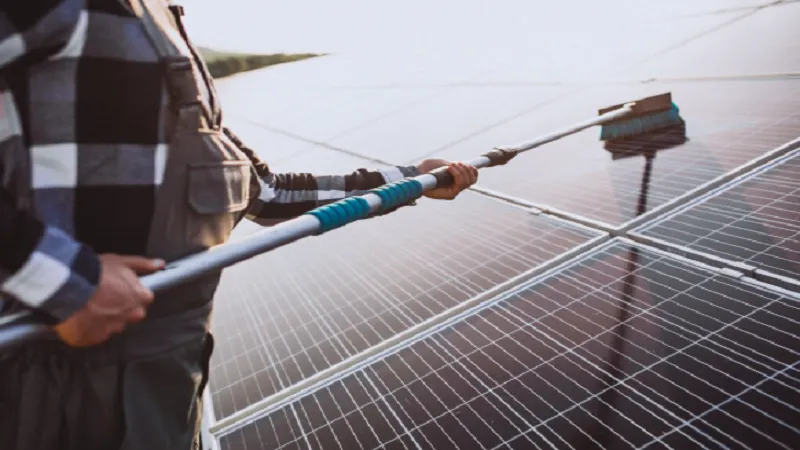
Cleaning can help, but it’s often less dramatic than people expect. In many climates, rainfall naturally washes away light dust and pollen, and panels continue to perform close to normal without manual cleaning. Dirt matters more when you live near farms, heavy traffic corridors, deserts, or construction sites where fine particles accumulate quickly. Bird droppings and sticky residue can also create localized shading that reduces output more than a thin layer of dust. The key is to treat cleaning as a response to measured performance change, not as a routine habit. If production is steady, you may not need to touch the panels for long periods. If you do clean, gentle methods are usually enough: clean water and soft equipment that won’t scratch glass or disturb seals. Avoid harsh chemicals, as they can leave a film, damage coatings, or affect surrounding roof materials. The goal is restoring light transmission, not polishing panels to look new.
-
Safety First: Why Roof Access Is the Real Risk
The biggest risk in solar “maintenance” is not the panels—it’s the person climbing onto the roof. Many injuries happen during DIY cleaning, especially on steep slopes, wet shingles, or hot surfaces that make footing unreliable. Electrical safety also matters: panels produce DC power whenever sunlight hits them, so touching wiring, connectors, or junction boxes is not the same as turning off a household appliance. That’s why many manufacturers and installers recommend leaving electrical troubleshooting to qualified technicians. Even simple tasks like spraying water can become unsafe if you slip or if water reaches areas not designed for it. Contractors often advise homeowners to focus on ground-level checks: confirm the inverter status lights, watch the app for alerts, and visually inspect from a safe location. If roof access is necessary, hiring an insured professional can be a practical choice, especially for two-story homes. A safe plan protects both your body and the system’s warranty conditions.
-
What Doesn’t Matter Much: Cosmetic Perfection and Constant Policing
A common mistake is treating panels like car windshields, expecting them to be spotless at all times. Small smudges, minor dust, and seasonal pollen often have a minimal impact compared to larger factors such as sun angle, temperature, shading, and system design. Another area people overthink is small debris, such as a few leaves that blow off after the next wind. Unless debris is persistent and creates shading for long periods, it typically isn’t worth the risk of roof work. Many homeowners also worry about micro-scratches from normal weather, but panels are built for hail and outdoor exposure, and minor surface marks usually don’t translate into noticeable performance loss. Over-maintenance can create problems: aggressive scrubbing can scratch glass, degrade coatings, or loosen mounting hardware if someone leans on and pulls the array. It’s smarter to treat solar like a low-maintenance appliance—observe, verify, and intervene only when evidence suggests it will make a meaningful difference.
-
A Practical Cleaning Trigger
Cleaning makes sense when performance data suggests it will pay off. If output drops noticeably during a season that should be stable, and you can see heavy dust, pollen mats, or droppings concentrated on part of the array, a careful wash can restore lost production. If rain is frequent and the surface looks lightly dusty, cleaning often won’t make much difference. Timing matters too: cleaning early morning or late afternoon reduces thermal shock and makes the work safer. The goal is not perfect appearance; it’s removing stubborn buildup that blocks sunlight long enough to matter.
-
Inverter, Wiring, and Mounting: Maintenance That Actually Protects the System
While panels are the visible part, the inverter and electrical components are often where maintenance attention pays off. Inverters have cooling needs, and poor airflow, dust buildup around vents, or direct sun exposure can shorten their service life. Keeping the inverter area clear and shaded where appropriate can help it run more consistently. Wiring and conduit should also remain secure; animals can chew cables, and exposure to heat and UV can stress components over time. From the ground, you can look for drooping wires, cracked conduit, or signs of nesting near equipment. Mounting hardware is another quiet issue. Panels expand and contract with temperature swings, and roofs move slightly through seasons. Properly installed racking handles this, but it’s still worth checking occasionally for unusual rattles after storms or visible shifts in panel alignment. If you notice water staining in the attic after installation or during heavy rain, address it promptly to protect both the roof and the solar attachments.
-
Seasonal Considerations: Dust, Snow, Heat, and Tree Growth
Solar maintenance changes by environment. In dusty regions, panels can accumulate fine particles that resist light rain, so occasional cleaning may be more important. In snowy climates, panels often shed snow faster than roofs do due to their smooth surfaces and heat absorption, but heavy snowpack can block production for days. Attempting to scrape snow off panels can be risky and may damage frames; many homeowners simply wait for the melt unless access is safe and tools are designed for solar. Heat also changes performance: panels produce less power when very hot, so a summer dip may be normal rather than a maintenance issue. Tree growth is another long-term factor. Branches that were harmless at installation can start shading panels after a couple of years, especially in the mornings and late afternoons. Trimming plans should be realistic and ongoing. Seasonal thinking prevents unnecessary cleaning and helps you focus on the changes that actually alter solar output and reliability.
Simple Habits Beat Constant Cleaning
Solar maintenance is mostly about awareness, not frequent hands-on work. Monitoring production helps you catch real issues early and tells you whether cleaning is worth the effort. Cleaning matters when the buildup is heavy and persistent enough to reduce sunlight reaching the panels, but rain and normal weather often handle light dust. The biggest risk is unsafe roof access, so ground-level checks and professional help are often the smarter path. Cosmetic perfection rarely improves performance, and aggressive cleaning can create damage that costs more than it saves. What matters more is keeping inverters ventilated, ensuring wiring and mounts remain secure, and responding quickly to unusual drops in output or signs of roof leakage. When you treat the system like a long-term home asset—observe, verify, and act only when needed—you keep solar reliable without turning maintenance into a weekly project.