
If you’re feeling the urge to refresh yourself on today’s container average cost ranges, the first thing you need to know is that the “sticker price” only gets things started. Shipping container prices in the real world fluctuate at any given time depending on local supply, port activity, delivery distance, and condition grade. In reality, the option that’s better for the long run is typically the one that corresponds to how you use it, not based on which has the lower number up front.
This cargo container price guide goes in depth on the key considerations below, and if you want to review current container cost ranges, it also helps you understand why prices move and what buyers are actually paying today. If you’ve never purchased a shipping container before, this article breaks down new vs used shipping container prices and shows you how to find out what things are going for right now.
Review Historical Container Cost Ranges (What Buyers Saw)
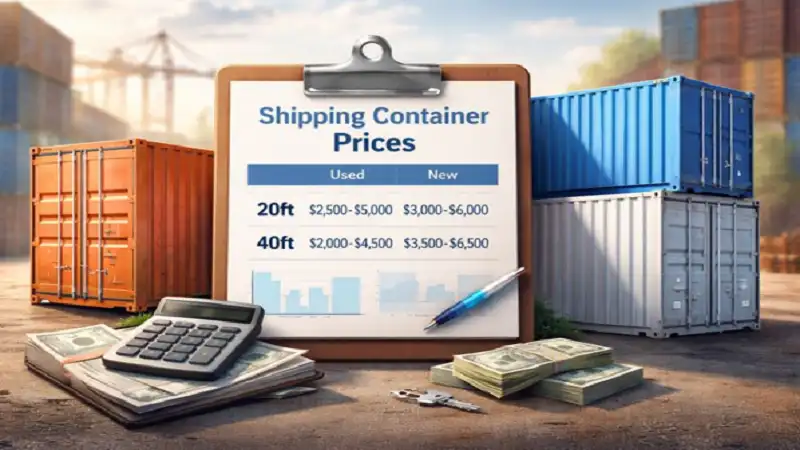
Most people shop by size (20ft vs 40ft) and condition (one trip/new vs used). For a general 2025 snapshot, standard dry containers often fall into these bands on average, depending on location and condition.
| Container type | Used pricing (typical range) | New / one-trip pricing (typical range) |
| 20ft standard | $2,500 to $5,000 | $3,000 to $6,000 |
| 40ft standard | $2,000 to $4,500 | $3,500 to $6,500 |
| 20ft ventilated | $1,000 to $3,000 | $2,100 to $4,500 |
| 40ft high cube | $2,500 to $5,000 | $4,000 to $7,000 |
These are container-only averages. Delivery, offload equipment, taxes, and site access can make the final quote jump around quickly, which is why one buyer paying twice as much as another isn’t so uncommon.
What It Really Means When We Say “One Trip” (and Why It Costs More)
“One trip” generally means that the container has been produced recently and then used once to carry a load of cargo before being sold into the secondary market. Most buying guides treat it as the cleanest and therefore most predictable grade for storage and conversions since, ordinarily, the floors, door seals, and roof panels don’t have much wear.
That predictability is what you’re buying. This is why new and one trip container costs are higher. You’re paying for fewer unknowns, fewer hidden patches, less corrosion, fewer door alignment problems, and a lower chance of lingering odors that can spoil a storage plan, especially if you store textiles, food-adjacent items, or equipment with rubber seals.
Second-Hand Container Prices: When a “Good” Deal Is Costly
Used container pricing may seem like the clear-cut victory, particularly if money is tight or you’re looking for very basic onsite storage. But the long-term math doesn’t pencil out when a “cheap” container surprises you with repairs you hadn’t budgeted for.
Water Tightness vs Real Dryness
Some used containers are marketed as wind-and-water-tight (WWT). That can still mean compromised patches, aging gaskets, or roof dents that collect water. You don’t need a major leak for moisture to become an ongoing cost, especially once you start paying for pallets, dehumidifiers, replacement packaging, and time.
Door Operation and Security
Doors that won’t shut firmly, tend to go crooked, or have bent locking bars become an everyday frustration. Repairs aren’t always expensive, but they can be a constant hassle. A buyer who opens the doors twice a day may pay more “in real life” than someone who opens them twice a month.
Floor Condition and Odor History
Floors are where surprises live. Many container floors are marine plywood, and cargo history matters. A container can be structurally solid and still smell strongly or show discoloration that suggests it absorbed chemicals. That’s why condition grading counts just as much as size.
The Container Cost Comparison That Solves the Real “Which Saves More” Question
To determine which saves you more long-term, compare these four buckets, not just the upfront quote.
Upfront Purchase Price
Used is usually lower. One trip is usually higher. That part is obvious.
Delivery and Placement
Delivery often narrows the gap. If you’re inland, a cheaper used unit may end up costing you more than a one trip unit sitting closer to your location. Also factor in whether your site requires tilt-bed delivery, a crane, or forklift assist.
A quick personal note: the biggest “price surprise” I’ve found in dealing with buyers has not been the container itself, but last-mile logistics. People budget for the box, and then get hit with access challenges such as narrow streets, soft ground after a rain, or longer equipment time. A great deal can still turn into a real stinker if placement fees blow up the plan.
Maintenance and Repairs During 3 to 10 Years
This is where one trip usually prevails. If you plan to paint your container, apply sealant (roof or walls, not the floor), install a lockbox and vents, or convert it into something else, starting with the cleanest shell possible usually means less work.
Used can still win long-term if you only need rugged storage, you’re okay with superficial dents and patches, you can inspect in person and walk away with a stout unit, and you’re fine doing minor maintenance.
Resale Value and How Easy It Is to Sell
One trip containers tend to hold more value since buyers have more confidence in the condition and cargo history. If you expect to sell in a few years, it’s not uncommon for resale value to compensate you for the higher upfront cost.
When One Trip Saves More Long-Term
When you care about reliability, cleanliness, and low hassle, one trip is typically the long-term value pick.
Best-Fit Scenarios
“If you’re warehousing inventory, tools that can’t rust, seasonal stock, and documents, really anything that would benefit from being protected from humidity and odors, one trip is frequently the better buy,” Mr. Gander said. If you’re converting the container (office, workshop, pop-up, container home shell), one trip also lowers the odds that your conversion budget will be wasted fixing issues you didn’t anticipate.
When Used Saves More Long-Term
Used typically ends up being more economical when you don’t need anything fancy and can tolerate imperfections.
Best-Fit Scenarios
Whether it’s farm storage, construction site storage, or a general-purpose “lock it and leave it” unit, used might be the smart call. The key is choosing a good grade, inspecting closely before you buy, or purchasing from a vendor that lists clear condition grading and stands behind it.
Don’t Forget About CSC and Transport Compliance (If You’re Going to Be Shipping It)
If you’re purchasing for international transportation or intermodal shipping, certification can change the cost. Some sellers note that CSC certification service may be an extra line item (for example, a quoted fee of around $150 in a seller’s FAQ).
If you only plan on storing the container on your own property, CSC may not be necessary for your use, but it’s still wise to confirm what your project actually requires.
Why Shipping Containers Feel Expensive Right Now (It Seems Random, But Isn’t)
Container prices are volatile because they’re tied to supply chains, trade flows, and regional imbalances in container stock. Industry coverage has noted that secondhand container values can rise alongside firm shipping market conditions, and future pricing can be influenced by market health as well as changes in demand.
For a shopper, the bottom line is simple: use online “average price” numbers as a starting point, then shop locally and compare delivered totals.
Guide: How to Shop Smarter (Without Overthinking It)
If you prefer a quick, reliable process, start with purpose. Storage is forgiving. Conversions or sensitive storage are not.
Shop price, not yard price. Ask about the precise method of delivery and whether offloading is included.
Choose the condition before “cheap.” In most deals gone bad, the buyer chased upfront savings and then paid later in repairs, moisture damage, or replacement work.
Conclusion: Which One Saves More in the Long Run?
If your priority is avoiding hassle and reducing the gamble of what you’ll get, one trip tends to deliver better long-run value even though the upfront quote is usually higher. If your priority is the cheapest upfront cost and your use case is relatively rough, used can save you more money, but not always, especially if you fail to inspect closely and compare delivered totals.
Either way, the solution is to review current container cost ranges and then run your own cash comparison that includes delivery, maintenance, and resale. This is how you turn shipping container costs into a decision you won’t regret.
FAQs
What’s the difference between “new” and “one trip” containers?
In most markets, “one trip” is essentially near-new, recently manufactured, and used exactly once to transport cargo before it is sold. It’s the one condition grade that tends to be widely interpreted as lightly worn, which appeals to buyers who want fewer surprises.
Are used shipping containers worth it for long-term storage?
They can be, if you choose the right condition grade and the unit is truly dry, secure, and structurally sound. Used container pricing is appealing, but the long-term value comes from avoiding leaks, bad floors, and door problems.
Why do container prices differ so much by location?
Local supply and demand matter. Ports may have more inventory, while inland areas can see higher delivered costs due to repositioning and longer hauling distances. Secondhand prices can also shift with market conditions.
How do I know if a used container will keep moisture out?
Ask how the seller rates it (WWT, cargo-worthy, or other condition levels) and inspect the roof, door seals, and interior. Look for light penetration, staining, or a musty smell. Buying according to a clear grading standard reduces risk.
When buying a container, do I need a CSC certificate?
Not always. CSC certification is commonly required if you intend to ship internationally or via intermodal transport. Some sellers include CSC-related services, and others charge extra, so confirm what’s included in your quote.
Explore More: Fapelli