
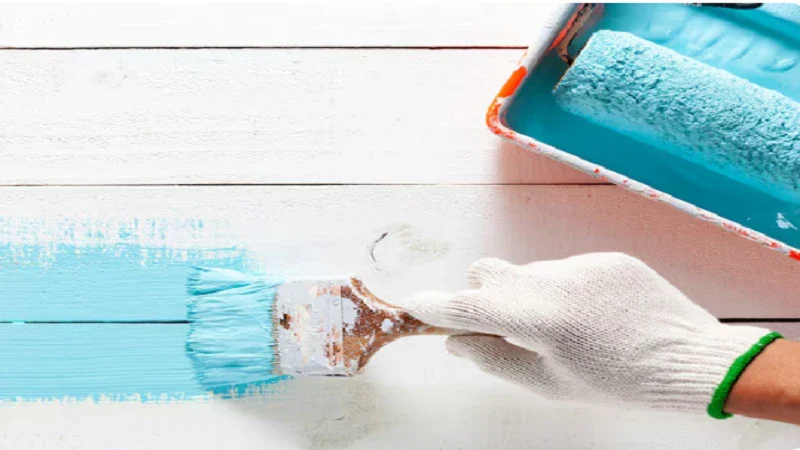
Paint durability is often judged by color retention, resistance to peeling, and how well a finish handles years of sunlight, moisture, cleaning, and seasonal expansion. Yet the life of a coating is decided long before the final coat dries. It begins with what happens at the surface itself. A wall, trim board, ceiling, or exterior panel must be clean, stable, dry, and properly profiled before paint can attach with lasting strength. When preparation is rushed, the finish may look smooth for a short time but fail much earlier than expected. Strong preparation creates the conditions that allow paint to bond evenly and age more consistently.
What Comes Next
- Cleaning Away Hidden Barriers
The first step in long-term paint performance is removing anything that blocks adhesion. Dust, grease, chalking, smoke residue, mildew, hand oils, and old soap film can remain on a surface even when it appears clean to the eye. Paint applied over those contaminants does not truly grip the material beneath it. Instead, it clings to the debris layer, which gradually loosens and takes the coating with it. This is why kitchens, bathrooms, exterior siding, and high-touch trim often need more than a quick wipe before painting begins. Washing, degreasing, rinsing, and allowing enough drying time are all part of creating a base that can hold paint under changing conditions. If that cleaning step is skipped, even a high-quality coating may blister, separate, or wear unevenly. Durability is not only about the paint’s formula but also about whether the surface underneath is stable enough to support it through repeated exposure to temperature changes, humidity, and normal daily use.
- Repairing Damage Before Coating
Surface preparation also determines whether existing flaws remain isolated or continue spreading beneath the new finish. Cracks, nail holes, loose wood fibers, water-damaged drywall, and failing caulk joints can all weaken the integrity of a painted surface. When those defects are covered without repair, paint becomes a cosmetic layer hiding structural instability rather than protecting a sound substrate. Over time, the damaged area often reappears through bubbling, cracking, discoloration, or edge separation. Filling, patching, sanding, and replacing compromised sections gives the coating a more uniform base and reduces the chance that stress will concentrate in one weak spot. This is especially important on older walls or exterior trim where previous paint failure may already indicate moisture intrusion or movement. A contractor may even use a Website photo gallery to show how unaddressed substrate damage can telegraph through fresh paint within a short period. Long-term durability depends on preparation that addresses the underlying weakness rather than merely concealing it under a new color.
- Sanding Creates a Stronger Bond
A durable paint job often depends on surface profile as much as cleanliness. Smooth or glossy materials can resist new coatings because they provide the paint with very little texture to grip. Sanding changes that by lightly abrading the surface and creating microscopic irregularities that help primer and paint adhere. This matters on previously painted trim, doors, cabinets, metal components, and patched areas where different materials meet. Without sanding, the finish may appear even at first but prove vulnerable to scuffing, flaking, or premature edge wear. Sanding also removes loose paint edges and feather transitions between old and new surfaces so the topcoat can cure more uniformly. If preparation stops at cleaning alone, hidden gloss or unstable paint film may still reduce adhesion. Proper abrasion does not need to be aggressive on every project, but it does need to be intentional. A coating lasts longer when it is applied over a surface that has been made both clean and mechanically receptive to bonding.
- Primers Help Surfaces Behave Consistently
Preparation is not complete when the wall looks smooth and dust-free. Different materials absorb and release coatings in different ways, which means a primer is often necessary to create a more consistent surface before finish paint is applied. Bare drywall, patched compounds, raw wood, stained areas, porous masonry, and repaired trim all respond differently when coated directly. Some may pull too much moisture from the paint, causing uneven sheen or weak film formation. Others may bleed stains, release tannins, or allow prior discoloration to move into the new finish. Primer helps regulate those differences so the topcoat cures at a more even rate and develops stronger adhesion. It also improves durability by bridging repaired areas with surrounding material, making the entire surface behave more like one unified plane. Skipping primer can save time in the moment, but it often shortens the job’s life by leaving the finish coat to handle tasks it was never designed to handle on its own.
Durability Begins Before Color
Long-term paint durability is built during preparation, not during the final brushstroke. Cleaning removes invisible barriers, repairs eliminate weak points, sanding improves grip, and primer helps the surface respond more evenly under the finish coat. When these steps are handled carefully, paint has a much stronger chance of resisting peeling, blistering, staining, and uneven wear over time. When they are rushed or ignored, the coating may still look fresh at first, but age poorly under normal exposure. A lasting finish depends on the condition of the material beneath it as much as the product applied on top. That is why surface preparation remains one of the most important parts of any painting project.