
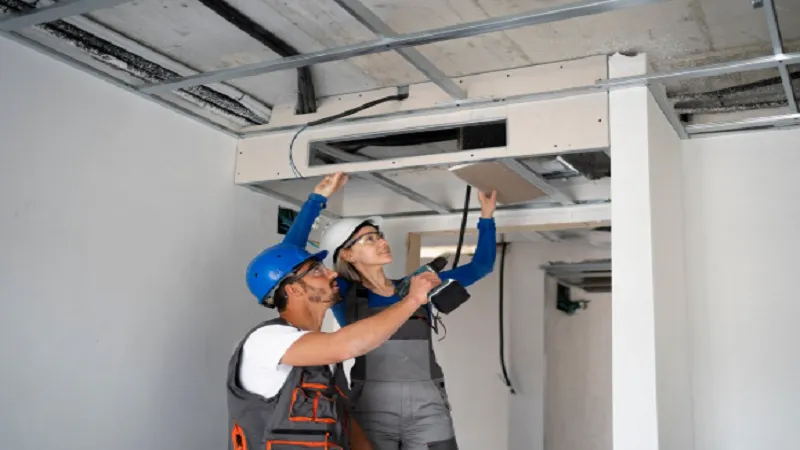
Early duct separation inside walls can quietly undermine comfort and efficiency long before a homeowner sees obvious damage. A loose joint can dump conditioned air into a cavity, pull dusty air into the return side, and create pressure imbalances that make rooms feel uneven. Because hidden duct runs are out of sight, the first clues are usually indirect, such as rising energy bills, longer run times, whistling at grilles, or a persistent dusty smell that returns shortly after filter changes. HVAC services detect early duct separation by pairing symptom mapping with airflow and pressure testing, then narrowing the location with targeted inspection methods. The aim is to confirm whether air is escaping or being pulled from unintended spaces, identify the most likely joint failure points, and recommend repairs before the problem becomes a larger comfort issue or causes moisture and insulation contamination inside the wall cavity.
How technicians find separation early
- Comfort patterns and airflow changes point to hidden leaks.
Technicians start by listening to the homeowner’s pattern description because duct separation produces consistent behavior. A single room that never reaches the set temperature, a floor that feels under-conditioned, or a space that only improves when doors are open can signal that supply air is not reaching its destination or that return air is restricted. They check register airflow by feel and with an instrument, comparing rooms that perform well with those that lag. They also look for drafts around baseboards or outlets, since a separated duct can pressurize a wall cavity and push air into living spaces through small gaps. If the separation is on the return side, the system may pull air from wall cavities, attics, or garages, increasing dust and odors and sometimes causing the filter to load quickly. These comfort clues do not confirm separation on their own, but they help the technician build a priority map of which duct branches are most suspicious and which side of the system is likely compromised.
- Pressure testing and static readings narrow the suspect zone.
After symptom mapping, technicians use pressure and airflow measurements to narrow the search. Total external static pressure can indicate whether the system is losing air or compensating for leaks by moving more air through fewer effective pathways. They may measure the pressure drop across the filter and coil, and compare the supply and return static pressures to see if one side is behaving abnormally. With duct separation, one common sign is a blower working harder while delivered airflow at registers remains low, since a portion of air is escaping into a cavity. In Rolesville, NC, technicians often pay close attention to attic-to-wall transitions and chase cavities where duct runs are routed through framed spaces, because those areas are prone to joint stress from temperature swings and building movement. They may also use room-pressure checks with doors closed to determine whether the home’s pressure balance is distorted by return leaks or missing return paths. These measurements help determine whether the issue is a single-branch separation or a broader leakage problem at a trunk or plenum connection.
- Duct leakage diagnostics using airflow tools and listening methods
To confirm leakage, HVAC services may use tests that quantify air loss and help pinpoint the location. A duct leakage test pressurizes the duct system and measures the amount of air escaping, providing a clear indication that the system is not sealed. While this test does not automatically identify the exact joint that failed, it confirms the problem and guides further investigation. Technicians also use smoke pencils or tracer methods near suspected leakage points, especially around registers, boots, and accessible transitions, to see if air is being drawn into or pushed out of cavities. Listening methods can be surprisingly effective. A separated joint can create a rushing sound in a wall cavity when the system is running, especially at high fan speeds. Some crews use acoustic tools to detect airflow noise behind surfaces, moving along the wall to find the loudest point. Thermal imaging can also help when temperature differences are big, because leaking supply air can cool or warm a section of wall differently than the surrounding areas. Combined, these tools turn indirect comfort complaints into measurable evidence.
Early detection protects comfort long-term.
HVAC services detect early duct separation inside walls by combining homeowner symptom patterns with airflow and pressure testing that reveals where air is being lost or pulled from unintended spaces. Static pressure readings, room airflow comparisons, and leakage diagnostics help narrow the suspect branch or transition point, while tools like acoustic listening, smoke tracing, and thermal imaging provide stronger confirmation without unnecessary demolition. When access is needed, technicians aim for small, controlled openings near likely joints to complete repairs with minimal disruption. After sealing and reattaching connections, verification testing confirms improved airflow and pressure balance, and preventive steps, such as improved support and mastic sealing, reduce the risk of repeat separation. Catching these issues early helps maintain efficiency, reduces dust and odor problems, and restores more consistent comfort across the home.